January 19, 2026
January is prime time for finally tackling all the tasks you've been postponing.
Doctor visits. Dentist checkups. Maybe getting that odd car noise checked out once and for all.
Preventive care often feels dull, but it's a small price compared to facing a crisis that could have been avoided.
So, let's get candid:
When was the last time your business technology underwent a thorough health assessment?
Not just fixing a printer issue last week - a comprehensive, detailed tech exam.
Because there's a big difference between "working" and truly being "healthy."
Beware the "Everything Seems Fine" Illusion
People often skip regular health checkups because they feel fine.
Similarly, many businesses defer technology assessments because:
"Everything appears operational."
"We're too busy right now."
"We'll address issues only if they arise."
But here's the catch: technology problems rarely announce themselves ahead of a crisis.
Just like dangerously high blood pressure can be symptomless, or a cavity might silently damage your tooth, tech issues often remain hidden until they explode into emergencies.
This is especially true in small businesses where downtime stems from:
- Known risks ignored for too long
- Outdated hardware that seemed fine until failure
- Backups exist but never truly tested for restore functionality
- Unchecked user access accumulating over time
- Unnoticed compliance gaps lurking in the background
Systems may run daily but still be just one glitch away from disaster.
What a Comprehensive Technology Health Check Entails
Think of a technology evaluation like a medical exam: a methodical inspection designed to uncover hidden issues before they become emergencies.
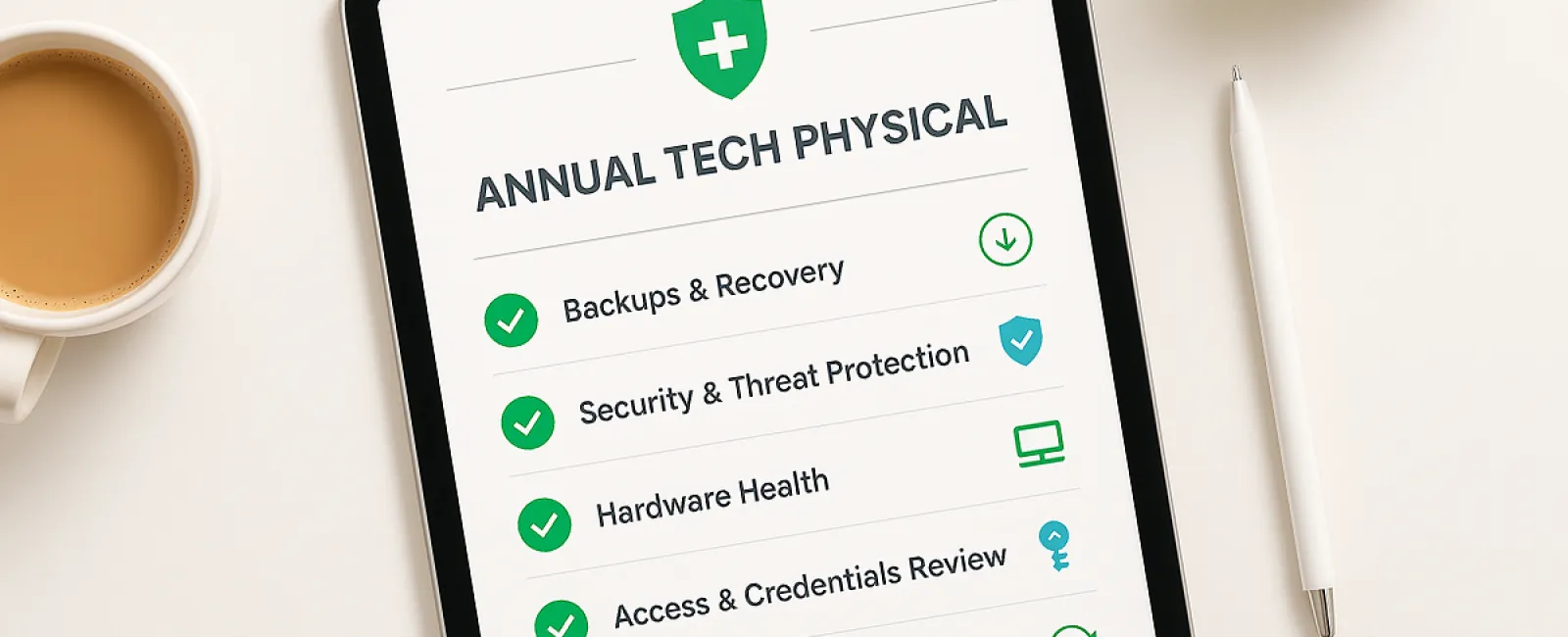
Critical Checkpoint: Backup & Recovery Evaluation
This is the lifeblood of your IT health. When all else fails, can you bounce back?
• Are scheduled backups truly completing successfully—not just running?
• When was the last time you restored a file successfully?
• If your main server went down unexpectedly, how quickly could you be back up? Are you prepared?
Many companies find their backups faulty only during crises — akin to realizing your airbags don't deploy during an accident.
Infrastructure Check: Hardware Durability & Support
Hardware doesn't fail quietly; it simply ages out, loses support, slows down, and suddenly crashes at the worst time.
- How old is your critical equipment—servers, firewalls, workstations?
- Has any hardware passed the manufacturer's support window, losing security patches and support?
- Are you proactively replacing equipment or waiting for catastrophic failure?
Aging technology is a leading cause of unexpected downtime—it lulls you into complacency until it stops working entirely.
Access Review: User Permissions and Credentials
Who has access to your systems? If your response is uncertain or vague, it's time for an overhaul.
- Do you maintain an up-to-date list of all system users?
- Are former employees or contractors still active in your systems?
- Do shared accounts prevent you from tracking individual user activity?
Unauthorized access grows unnoticed, not from carelessness but from the lack of routine cleanup.
Disaster Preparedness: Anticipate and Plan
Facing worst-case scenarios may be uncomfortable, but planning is essential.
- If ransomware struck tomorrow, do you have a clear, tested response plan?
- Is this plan documented and practiced?
- How long could your business operate without key systems?
Relying on "we'll figure it out" is not a strategy—it's a gamble.
Compliance and Industry Standards: Tailored Assessments
Your industry defines "healthy" through specific regulatory standards that must be met.
- Healthcare providers must comply with HIPAA or risk hefty fines per violation.
- Businesses handling credit cards must follow PCI rules or face severe penalties.
- Client contracts frequently require strict security compliance increasingly enforced.
Generic IT advice won't cut it; you need experts familiar with your industry's unique challenges.
Signs It's Time for Your Tech Health Check
If these sound familiar, it's time for a thorough review:
"I think our backups are functioning." (Are you sure?)
"Our server is aging but still runs." (Like a car right before a breakdown.)
"We might have ex-employees with system access." (Probably?)
"Our disaster plan exists... somewhere." (If you can't find it instantly, it doesn't exist.)
"If a key team member left, it would cause problems." (Single points of failure are ticking time bombs.)
"We'd probably fail an audit, but nobody's asked yet." (Not yet, but it's coming.)
The High Price of Neglecting Technology Maintenance
An IT checkup takes a few hours.
Downtime can cost you days or even threaten your entire business.
Here's the cold, hard truth:
Data Loss: Without reliable backups, a server failure can erase client data, financial records, and project files permanently. Some businesses never recover.
Downtime Costs: Every hour offline means lost revenue, delayed projects, and damaged customer trust.
Fines for Non-Compliance: HIPAA fines can reach $50,000 per violation; PCI failures can stop payment processing; state privacy laws regularly introduce new penalties.
Ransomware Expenses: Recovery can easily top six figures, factoring in ransom payments, remediation costs, business interruption, and reputation damage.
Preventing problems is affordable and dull.
Recovering from disasters is costly and devastating.
Why You Need a Qualified Expert, Not a DIY Approach
You don't check your own blood pressure and declare yourself healthy; you turn to a professional who knows where to look and has the experience to interpret results accurately.
The same applies to your technology environment.
Partner with someone who:
- Understands the specific IT standards relevant to your business size and industry.
- Has seen common and subtle issues that trigger major failures and knows exactly how to spot them.
- Provides fresh insights into your systems, identifying issues you've unknowingly normalized.
This is true proactive protection, not reactive crisis management.
Book Your Technology Health Check Today
With January packed with preventive appointments, don't overlook your IT health.
Schedule your Annual Technology Physical now.
We'll thoroughly evaluate your setup and deliver a straightforward health report outlining what's working well, potential risks, and urgent fixes—no jargon, no pressure, just clear guidance.
Click here or give us a call at 507-718-4288 to book your 15-Minute Call.
The best moment to address a problem is well before it becomes a crisis.
That moment is now.